

Same Office, More Documents Every Year? How to Manage Your Space Without Relocating
In today’s digital age, many organizations are moving toward paperless operations. However, the reality is that businesses still need to retain physical documents, including legal records, accounting documents, contracts, and other important paperwork, to comply with various business and regulatory requirements.
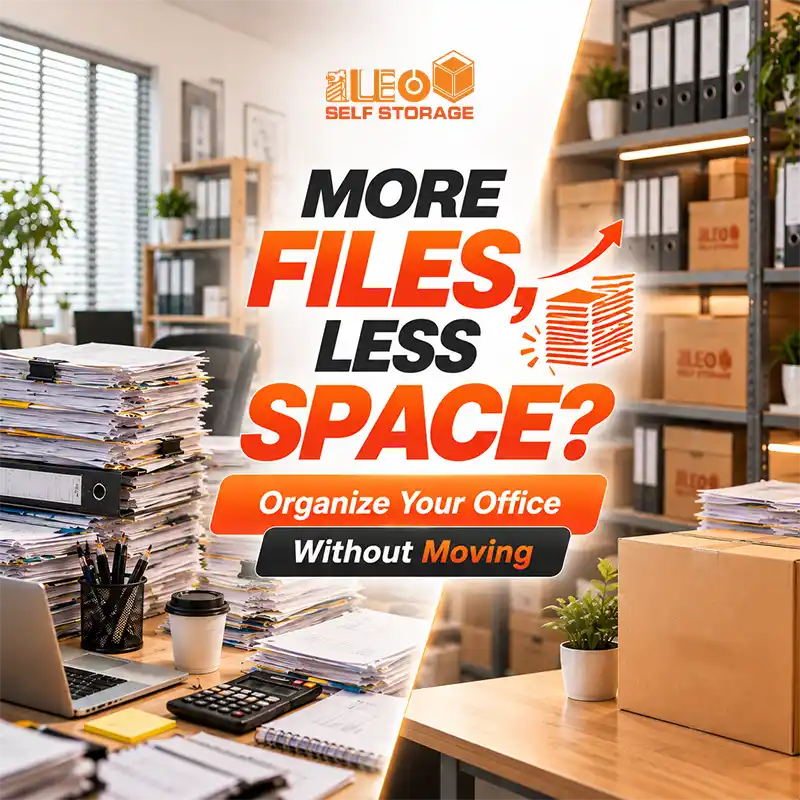
As the years go by, filing cabinets and document boxes continue to accumulate, gradually taking over valuable workspace. What was once a spacious and comfortable office can start to feel like a small warehouse, affecting both the working environment and overall business efficiency.
Common Problems Caused by Excessive Document Storage in the Office
Keeping large volumes of documents and office supplies without a proper storage system can lead to several challenges.
1. Reduced Workspace
Desks that should provide a comfortable working environment and relaxation areas intended for employees may gradually be replaced by bulky filing cabinets and stacks of document boxes.
This makes the office feel cramped and cluttered, leaving employees with less space to work comfortably and efficiently.
2. Difficulty Finding Important Documents
As the volume of paperwork increases, organizing and categorizing documents becomes more challenging.
When an important document is urgently needed, employees may spend hours or even days searching through filing cabinets and storage boxes, resulting in wasted time and reduced productivity.
3. Risk of Document Damage
Paper documents are particularly sensitive to moisture, sunlight, dust, insects, and termites.
When stored in ordinary office environments without suitable storage conditions, important records may deteriorate over time, potentially becoming damaged or unusable.
4. Insufficient Space for Office Equipment
Documents are not the only items taking up valuable office space.
Unused office chairs, outdated computers, spare furniture, exhibition boards, and equipment used only occasionally can also accumulate, leaving businesses with limited space for essential daily operations.
Is Renting Self Storage More Cost-Effective Than Expanding Your Office?
When office space becomes limited, many organizations begin exploring ways to create more room.
However, before deciding to relocate or rent additional office space, it is worth comparing the long-term costs and benefits of each option.
| Option | Advantages | Limitations / Costs |
|---|---|---|
| 1. Relocating to a New Office | Provides a larger workspace and an opportunity to upgrade to a more modern office environment. | Involves significant expenses, including security deposits, renovation costs, moving expenses, and potential changes to employees’ commuting arrangements. |
| 2. Renting Additional Office Space | Allows the business to remain in its current location without relocating. | Office rental rates per square meter in central business districts (CBDs) can be expensive, making it less cost-effective to use premium office space solely for document storage. |
| 3. Using Self Storage | A potentially more affordable and flexible solution, allowing businesses to rent storage space based on their actual needs. | Employees may need to travel to retrieve documents. However, a well-organized filing and labeling system can make document retrieval more convenient and efficient. |
For businesses that simply need additional space to store documents and rarely used equipment, self storage can be a practical alternative to expanding or relocating their offices.
Create More Space for Business Growth with LEO Self Storage
If your organization is struggling with limited office space and looking for a reliable document storage solution, LEO Self Storage offers convenient and secure storage facilities designed to support business needs.
Security and Peace of Mind
Our facilities feature security systems, CCTV surveillance, and controlled access to help protect your company’s important documents and stored belongings.
These security measures provide an additional layer of protection, helping businesses reduce the risk of unauthorized physical access to their stored materials.
Convenient 24/7 Access
Customers can access their storage units 24 hours a day, making it convenient to retrieve, organize, or transport documents and office equipment whenever needed.
Our facilities are designed to provide clean, accessible storage spaces, allowing businesses to keep their belongings organized and separate from everyday office activities.
By moving rarely used documents and office equipment into a dedicated storage unit, your employees can enjoy a more spacious, organized, and productive working environment.
Make room for your business to grow without the hassle of relocating your office.
Contact LEO Self Storage today to learn more about our storage solutions and special offers for corporate customers.
FAQ: Document and Office Equipment Storage
Q: How long must businesses keep accounting and tax documents in Thailand?
A: Under Thailand’s accounting and tax regulations, businesses are generally required to retain certain accounting records, financial documents, and supporting tax documents for at least five years.
In some circumstances, the required retention period may be extended to up to ten years, depending on the type of document and applicable legal requirements.
For this reason, having a secure and organized document storage system is essential for businesses that need to maintain records for regulatory compliance, audits, and future reference.
Q: How should business contracts be stored securely?
A: Important documents such as business contracts, employment agreements, and legal ownership records should be stored in properly sealed containers and organized by document type and year.
Businesses should also take appropriate precautions against insects, moisture, dust, and other environmental factors that could damage paper records.
For confidential documents, it is important to choose a storage location with suitable security measures and implement internal access controls to help prevent unauthorized access to sensitive business information.
Q: Where should businesses store office equipment that is rarely used?
A: Office equipment such as spare desks, chairs, older computers, and exhibition or event materials does not necessarily need to occupy valuable workspace.
Renting a separate self-storage unit for documents and office equipment allows businesses to free up office space while keeping these items available for future use.
This helps create a cleaner, more organized working environment and allows businesses to make better use of their existing office space.